Bookings through this site are not open yet; it is looking for a local Antioch installer to work with. You can check typical prices below and ask to be notified.

How to Test a Garage Floor for Moisture Ahead of Epoxy

Epoxy Floors Craft Antioch explains the three ways a concrete garage slab is tested for moisture before a coating goes on — the plastic sheet check, the calcium chloride test and in-slab humidity probes — and what to do with the readings.

Check availability & price range Illustrated guide · Garage Floor Prep and Crack Repair
(925) 445-0003 Voicemail

Bookings aren't open yet. Leave your name and number; your message is recorded, and you'll get one message when a local installer is available.

Epoxy Floor Guides

The floor as it starts

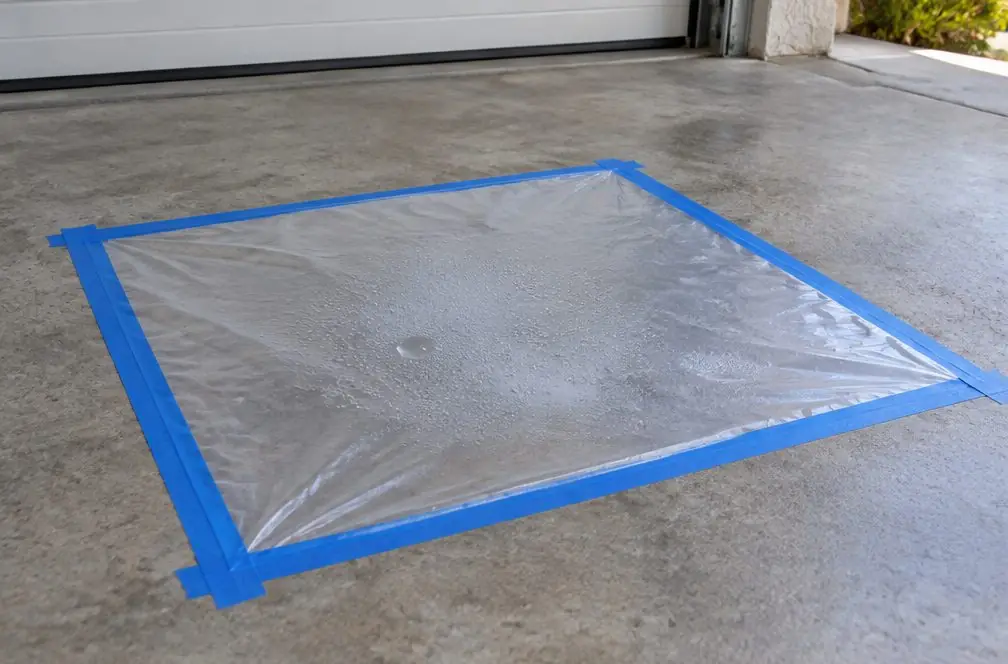
Illustration: a square of clear plastic sheeting taped at its edges to a bare garage slab, with a small drop of condensation visible underneath Illustration
Concept illustration, AI-generated. Not a photo of a completed installation.

The finished floor (illustration)

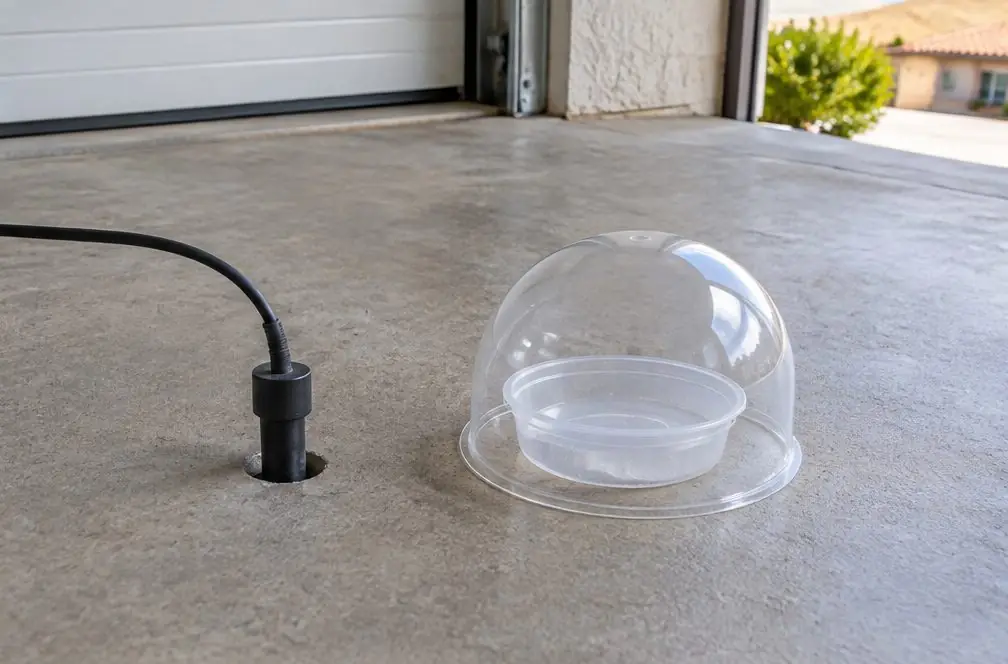
Illustration: a small sealed humidity probe in a drilled hole in a garage slab beside a calcium chloride test dish under a clear cover Illustration
Concept illustration, AI-generated. Not a photo of a completed installation.

Why moisture ends coatings

A slab with moisture vapor coming up through it can push a coating off. Concrete is porous, and in a slab-on-grade garage the ground below is the source; many older slabs have no vapor barrier at all. Contra Costa County's building findings describe local soils as clay loam and alluvial fans, which hold water, and a young slab also carries water from curing.

Test one: the plastic sheet check

A taped square of plastic is left on bare concrete for about a day. Condensation underneath, or a dark patch on the slab when the plastic is lifted, suggests moisture. It is cheap and quick and tells yes or no, not how much.

Test two: calcium chloride, ASTM F1869

A dish of calcium chloride is sealed under a dome on the bare slab for 60 to 72 hours. The weight gain gives the moisture vapor emission rate in pounds per 1,000 square feet per 24 hours. Many coating data sheets state a maximum rate; above it, a moisture-mitigating primer is used or the job is reconsidered.

Test three: in-slab humidity, ASTM F2170

A hole is drilled into the slab, sleeved and sealed, and a probe reads relative humidity inside the concrete after the slab has equilibrated. It reads deeper than the surface, so it catches moisture the calcium chloride test can miss. The reading is compared with the data sheet's limit for the product.

What to do with the readings

Reading Usual response
Under the data-sheet limit Coat as planned
Over the limit Vapor-barrier primer, priced as an option (about $400–$1,000 for a typical garage)
Far over the limit, or a leak at the edge Fix the source or reconsider the job before any coating

Ask for the method, the number of test spots and the readings in writing.

Where this leads

Check availability and the price range for this setup

Bookings aren't open yet — a typical Antioch range in about 30 seconds.

Step 1 Range —
    Which floor is it?

    Garage at home, or a warehouse, kitchen, shop, showroom, gym or clinic floor.

    How big is the garage?

    Typical: a 2-car garage, about 420 square feet here.

    Measure wall to wall; length × width in feet gives the square feet.

    Which coating system?

    Typical: flake (chip) epoxy, the system most price guides list first.

    What shape is the slab in? pick all that apply

    Typical: a sound slab with hairline cracks only.

    Anything extra? optional

    Skip if none apply; a moisture primer only follows a moisture test.

    What kind of business floor?

    Pick the room that carries the most traffic.

    How big is the area to coat?

    Length × width in feet, or the square feet. Typical: 2,000 sq ft.

    Which floor system?

    Typical for dry storage and bays: solid color epoxy with grit.

    What shape is the slab in? pick all that apply

    Typical: a sound slab.

    When can the work happen? optional

    Typical: after hours or on a weekend. No price change.

    Anything extra? optional

    Skip if none apply; coved base is typical for kitchens and clinics.

    Notes and photos optional

    Optional: a short note or a photo of the floor.

    Additional files (optional) If you like, attach any file related to your request. Nothing is required. Please avoid photos of people, especially children, and documents with personal or financial details. Location data is removed from photos when they are received. Bookings through this site are not open yet, so no one reviews or prices these files. Up to 5 files, 10 MB each: photos (JPEG, PNG or WebP) or PDF.
      Your range

      A ZIP code is enough; email and phone are optional.

      • Pick the floor, its size and a system to see the range.

      Typical Antioch range—

      One message when bookings open

      Bookings through this site are not open yet. No installer will contact you. Your details are used only for the price range and, if you leave an email, one availability message.

      This site is operated by Liberty Horns LLC and is not a contractor. Price ranges are market estimates, not quotes. Privacy Policy.

      Typical Antioch area floor coating prices, square foot by square foot

      Pick garage or business, the size and the system, and see the range. No contact details needed. Bookings open here once a local installer is named on this site.

      (925) 445-0003 Voicemail

      Bookings aren't open yet. Leave your name and number; your message is recorded, and you'll get one message when a local installer is available.

      Voicemail (925) 445-0003
      Enlarged photo