
Flake Epoxy Garage Floor
The decorative system most garage price guides list first, with the layers, the broadcast choice and the top coat explained.
Typically from $6/sq ft
Garage floors and commercial floor coatings · Antioch, CA
Epoxy Floors Craft Antioch is a local guide and availability check for epoxy and polyaspartic floor coatings in Antioch — garage floors in 1970s tract homes and newer south-side subdivisions, and concrete floor coating for warehouses, kitchens, auto shops, showrooms, gyms and clinics. See typical prices for your own square footage, how a coating is chosen for a garage that bakes in a Delta summer, and whether a local installer has bookings open for your ZIP yet.
Notify me when bookings open · typical prices in about 30 seconds
Bookings aren't open yet. Leave your name and number; your message is recorded, and you'll get one message when a local installer is available.
 Illustration
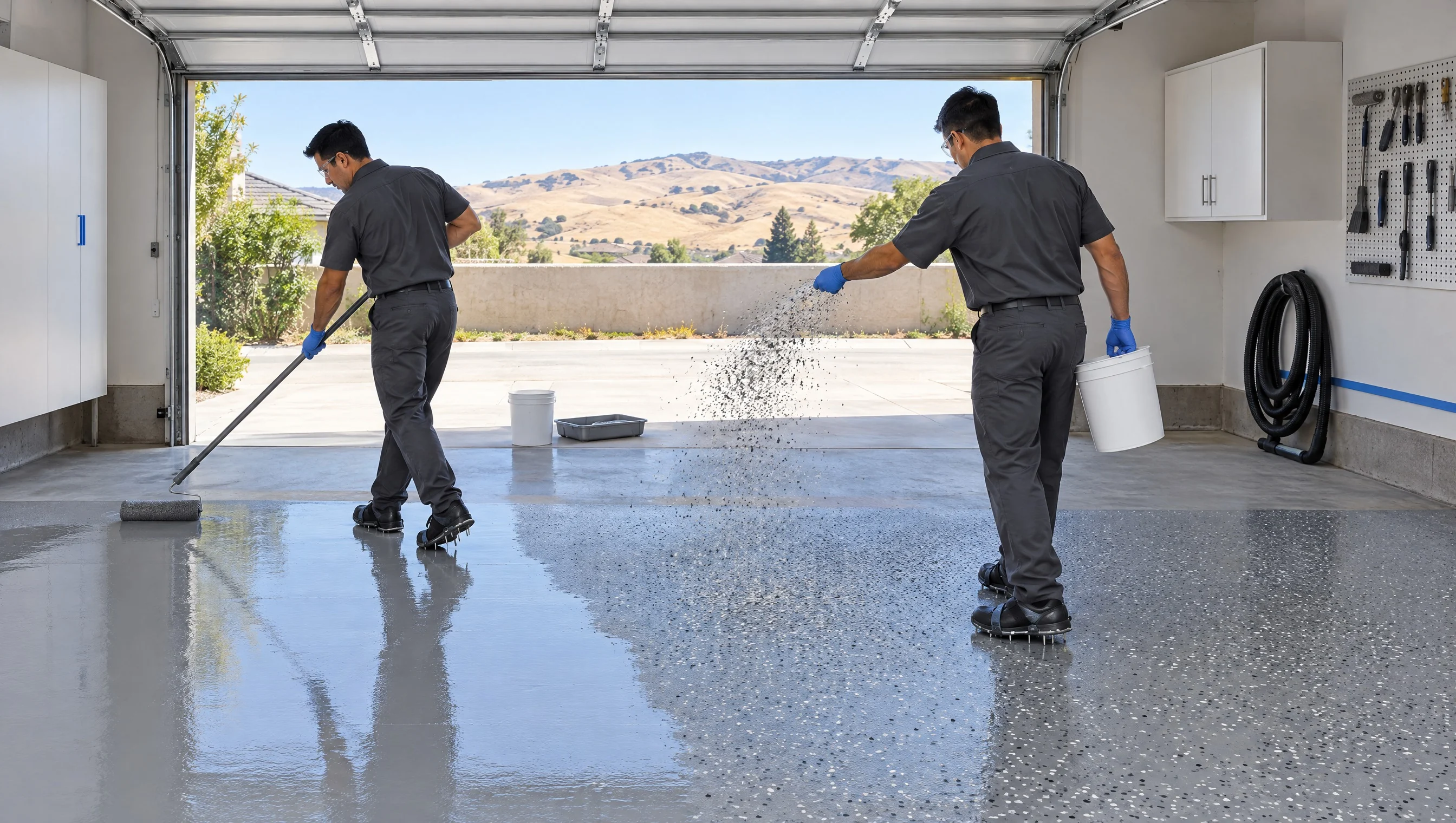
AI-generated illustration. The people shown are not real installers.
Six garage pages, one for each decision: which system, how the slab is prepared and what happens to an old coating.
The decorative system most garage price guides list first, with the layers, the broadcast choice and the top coat explained.
Typically from $6/sq ft

The one-day systems explained straight: the cure timeline, the odor and heat trade-offs, and when epoxy is the better call.
Typically from $8/sq ft
The plain-color option for workshops and budget refreshes, with the grit trade-off and a frank DIY comparison.
Typically from $4/sq ft
The swirled, depth-of-color floor, what the slab must be like for it and where it goes wrong.
Typically from $9/sq ft

What the slab needs before any coating: grinding, crack and spall repair and moisture testing, explained step by step.
Typically from $2/sq ft

Why a coating failed, how it comes off and what a recoat should change.
Typically from $2/sq ft
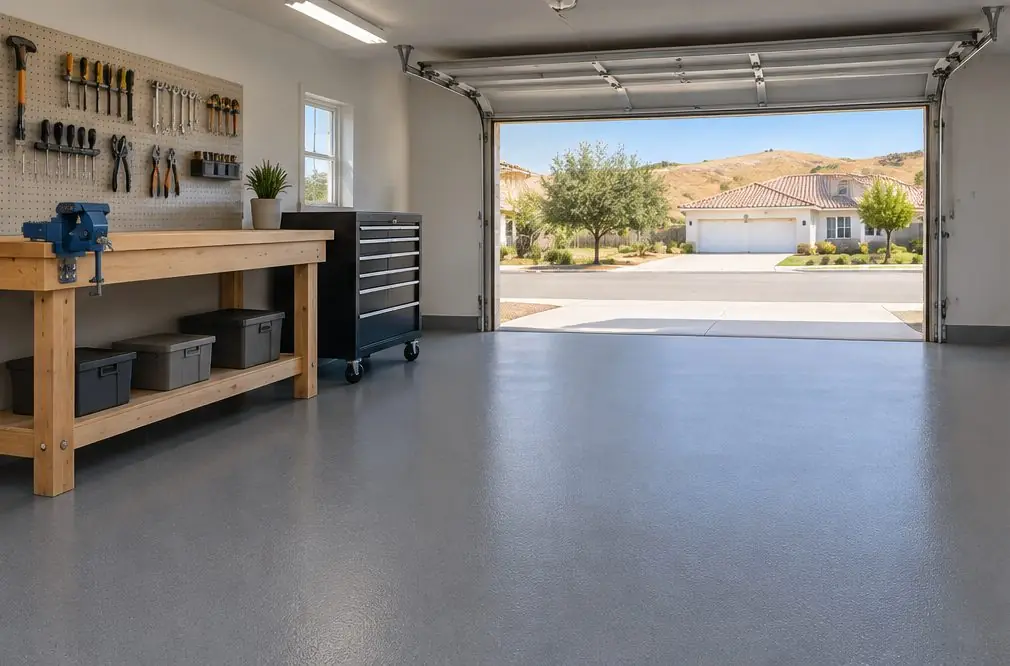 Illustration
Typical total $960–$1,680
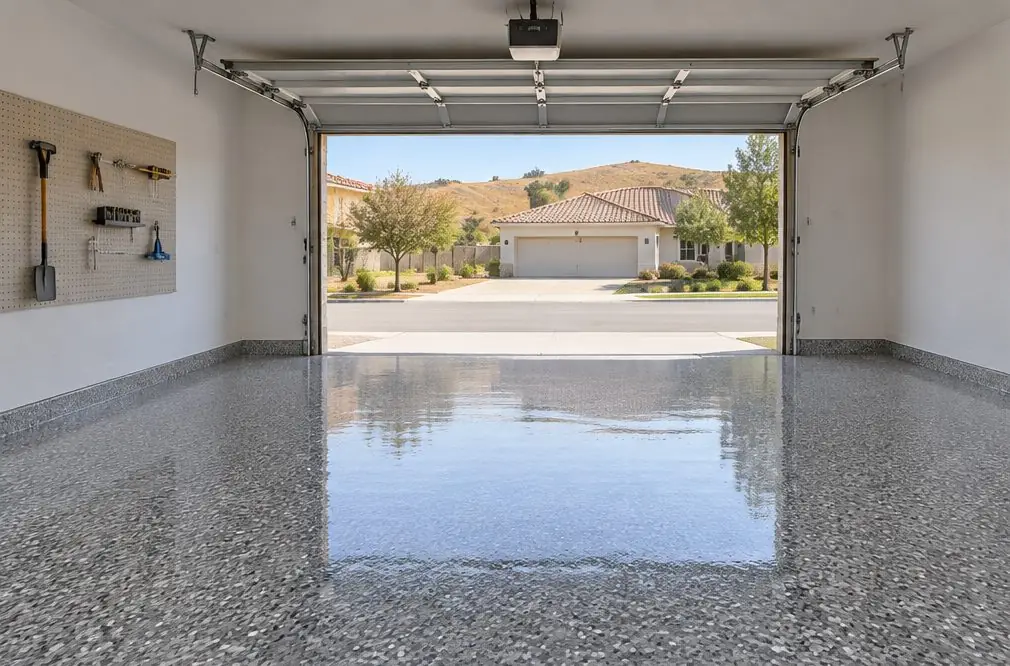 Illustration
Typical total $2,990–$4,820
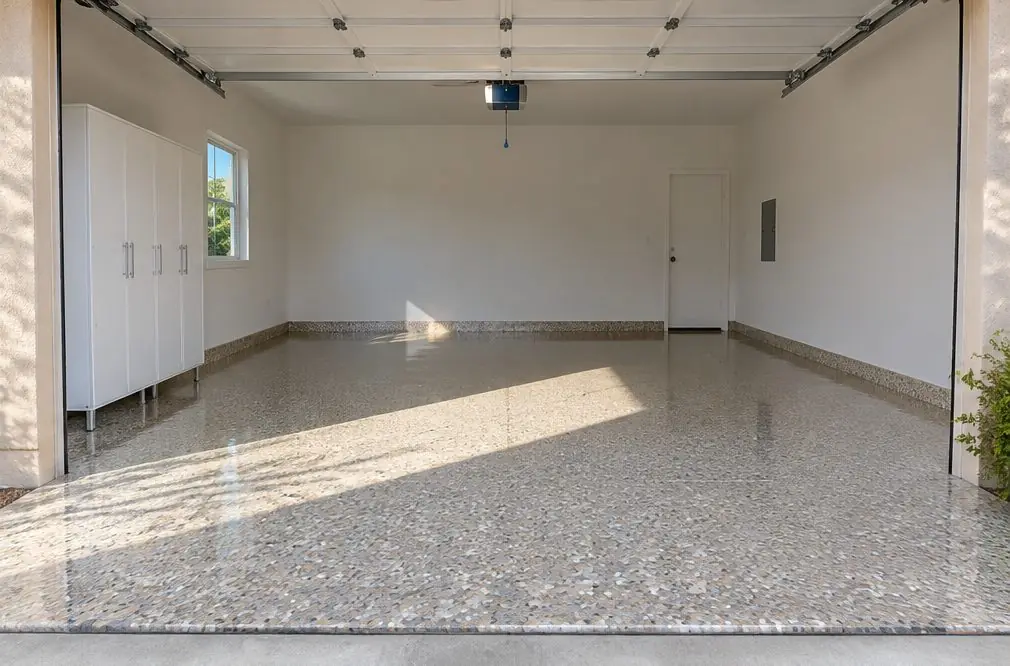 Illustration
Typical total $6,736–$10,856
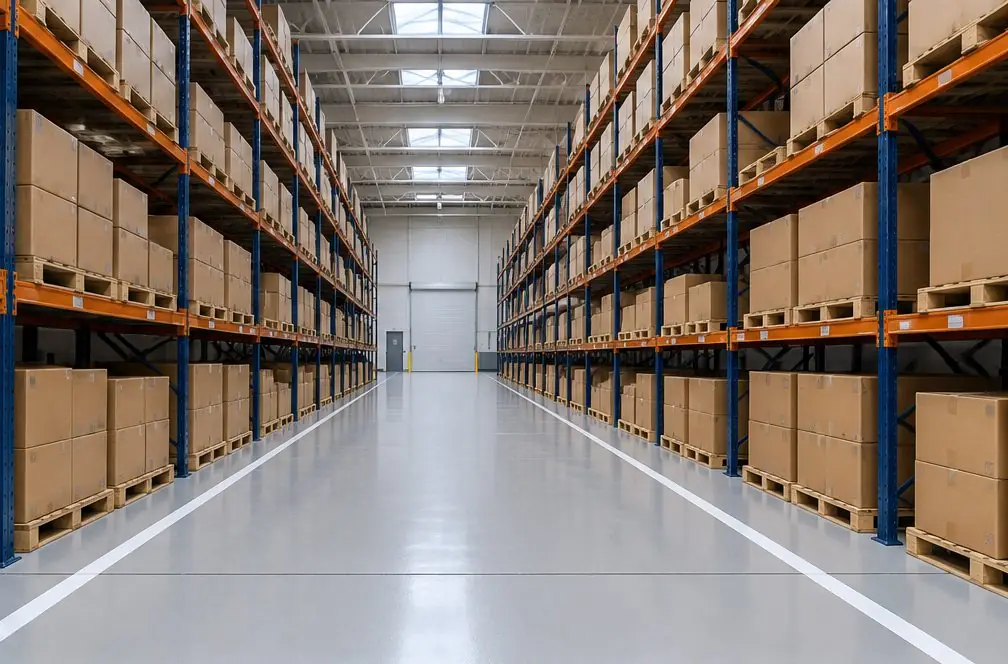 Illustration
Typical total $15,600–$32,400
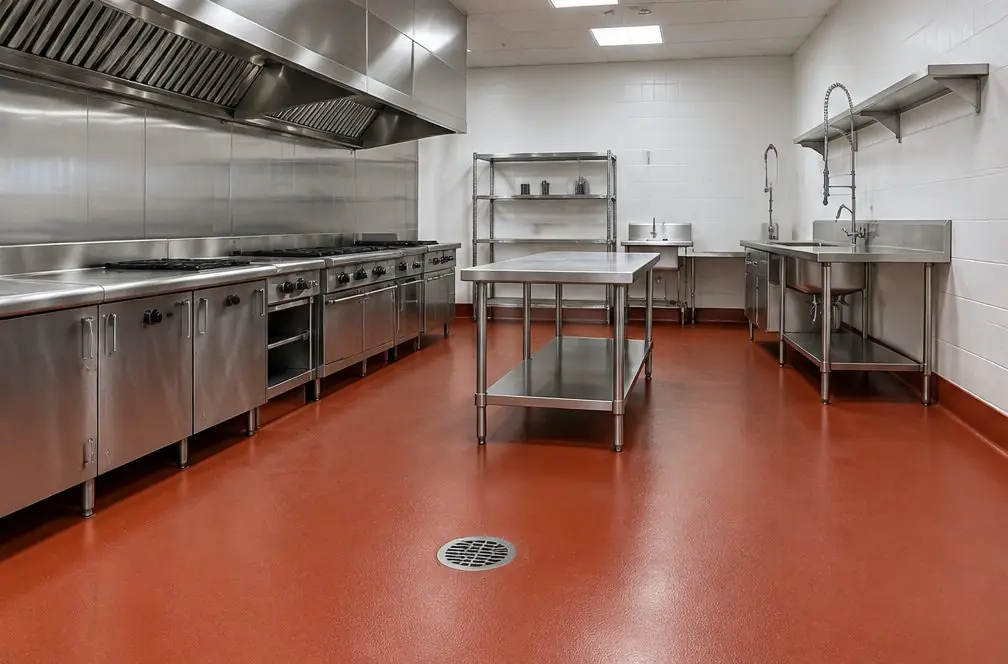 Illustration
Typical total $15,200–$31,000
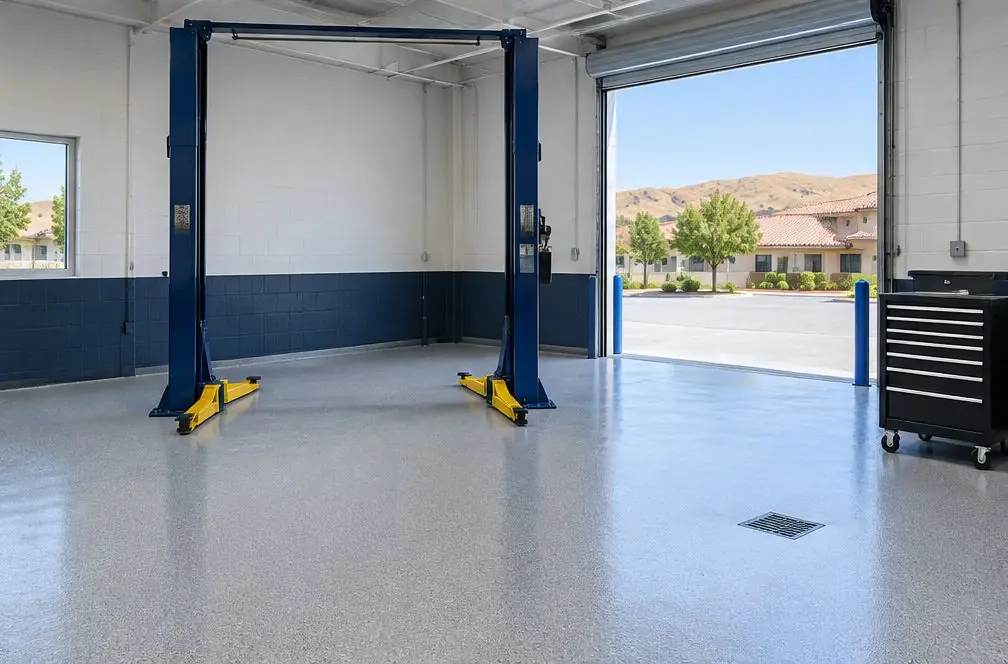 Illustration
Typical total $21,900–$43,200
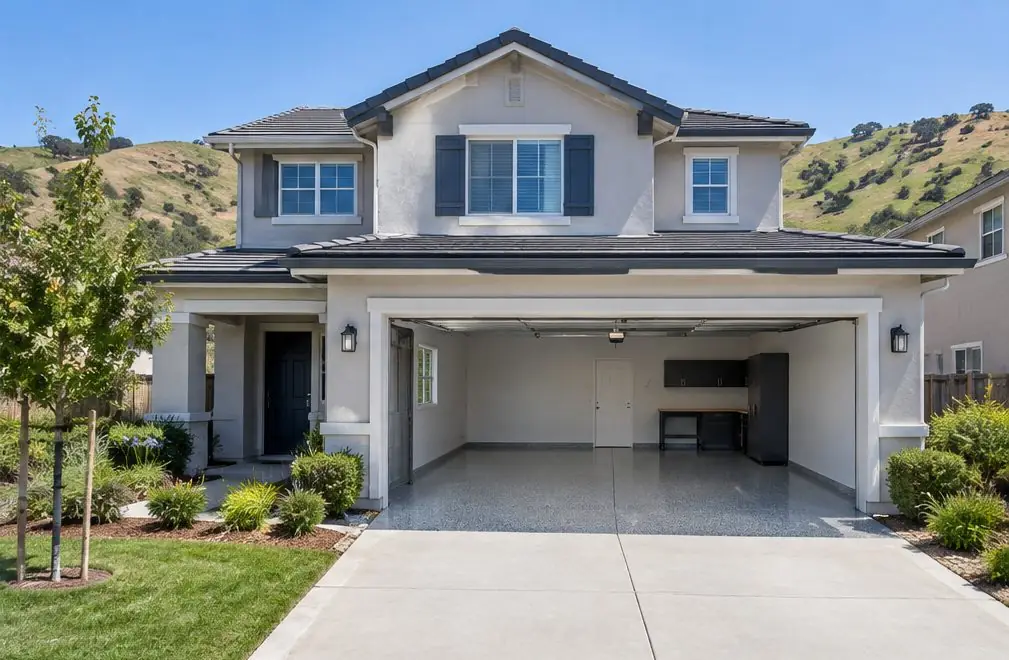
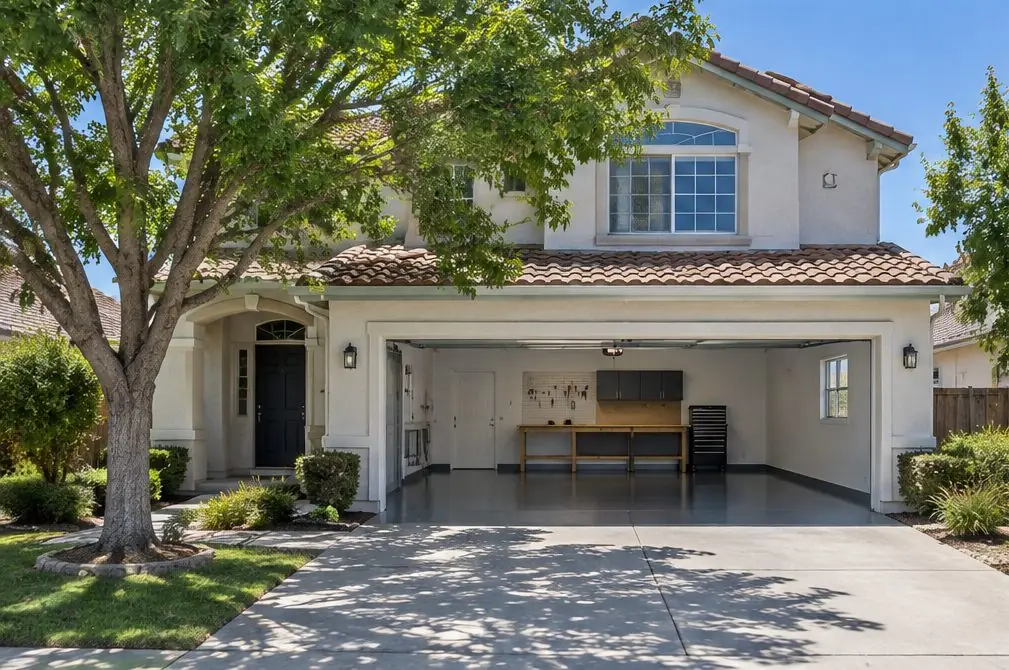
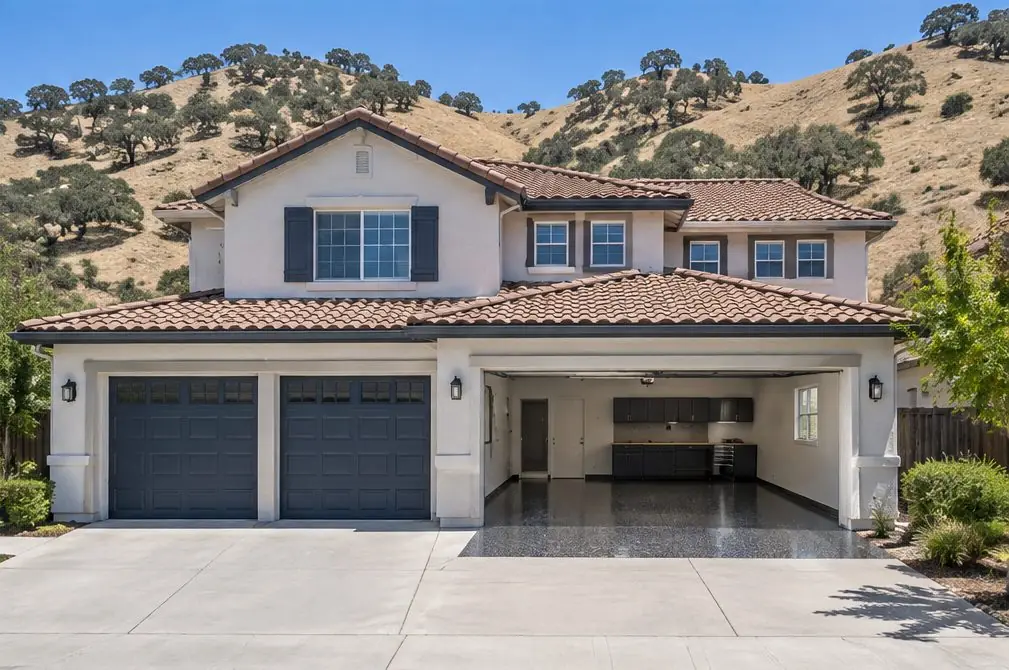
Hypothetical typical projects. Pictures are AI-generated concept illustrations, not photos of completed installations; no installation was performed or arranged through this site; prices are typical Antioch area market ranges, not quotes.
Answer a few quick questions, one at a time: garage or business, the size, the system and the slab. The total updates as you go and uses the same Antioch area market figures shown on every page of this site.
Takes about 30 seconds · no sign-up to see your range
Check availability and get your Antioch area price range
Bookings aren't open yet — a typical Antioch range in about 30 seconds.
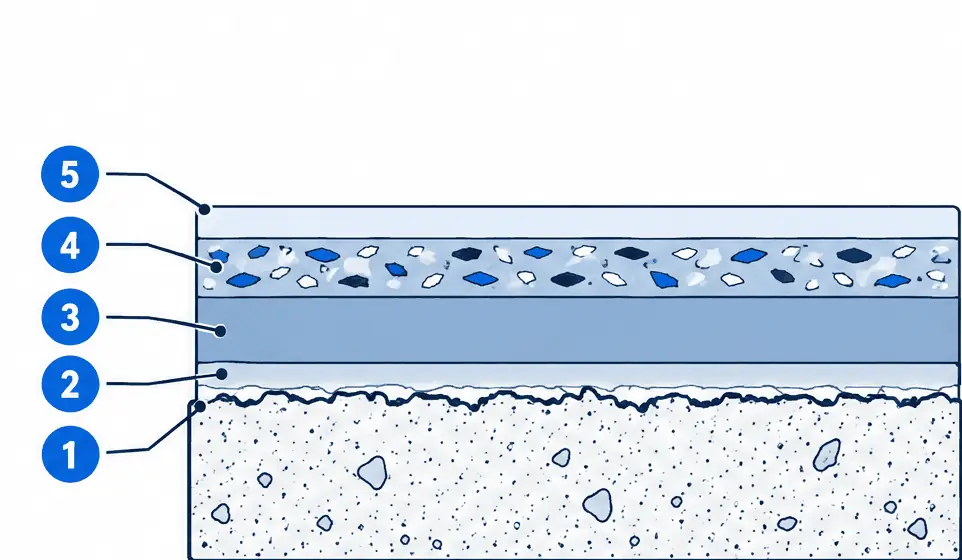
Fits Fits a garage that wants color, hides tire marks and dust, and a texture that grips. Full broadcast hides the base color completely.
Typically $6–$9 per sq ft about $2,520–$3,780 for 420 sq ft, installed
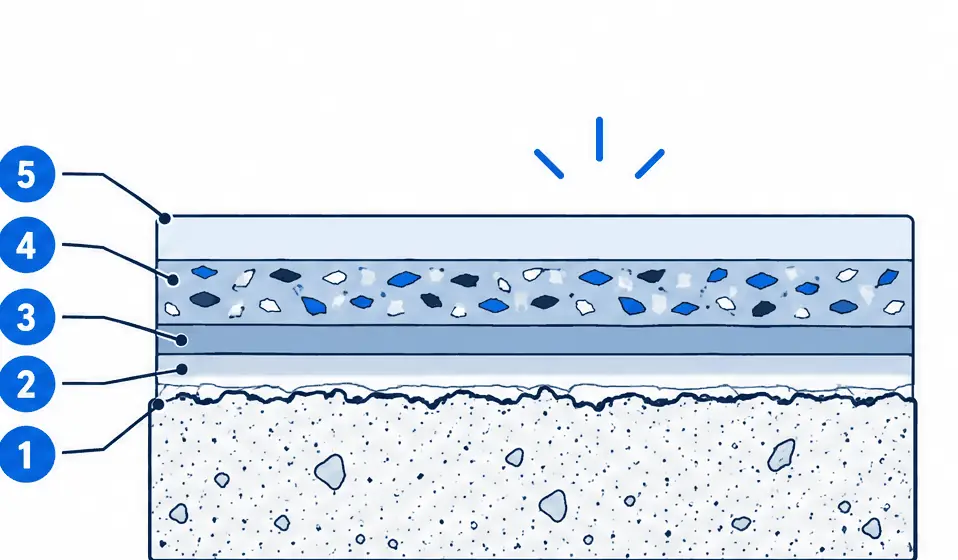
Fits Fits a garage where the door stays open in the afternoon sun, or where the floor has to be back in use quickly.
Typically $8–$12 per sq ft about $3,360–$5,040 for 420 sq ft, installed
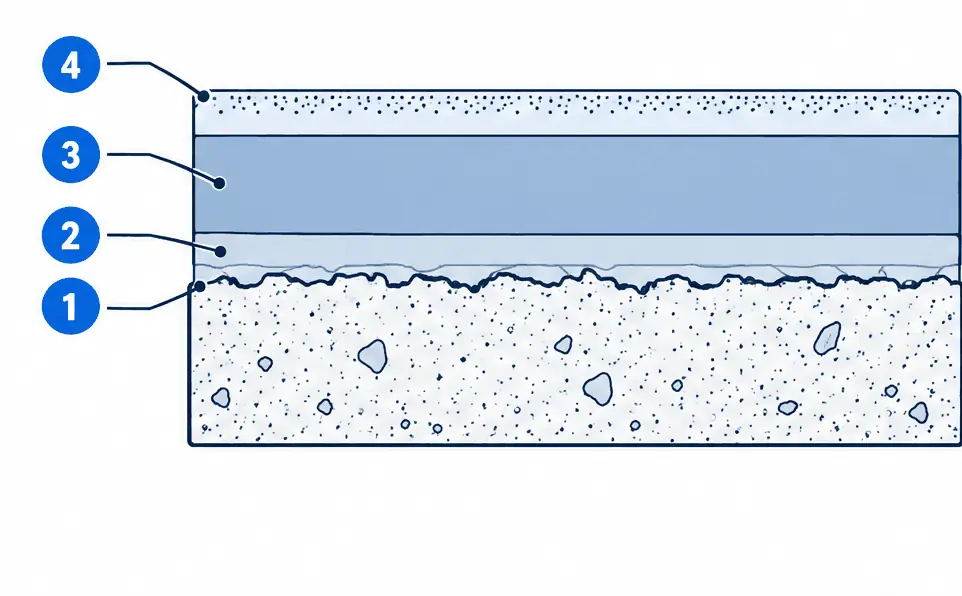
Fits Fits a workshop or a budget refresh where a plain, easy-to-clean surface matters more than a decorative finish.
Typically $4–$7 per sq ft about $1,680–$2,940 for 420 sq ft, installed
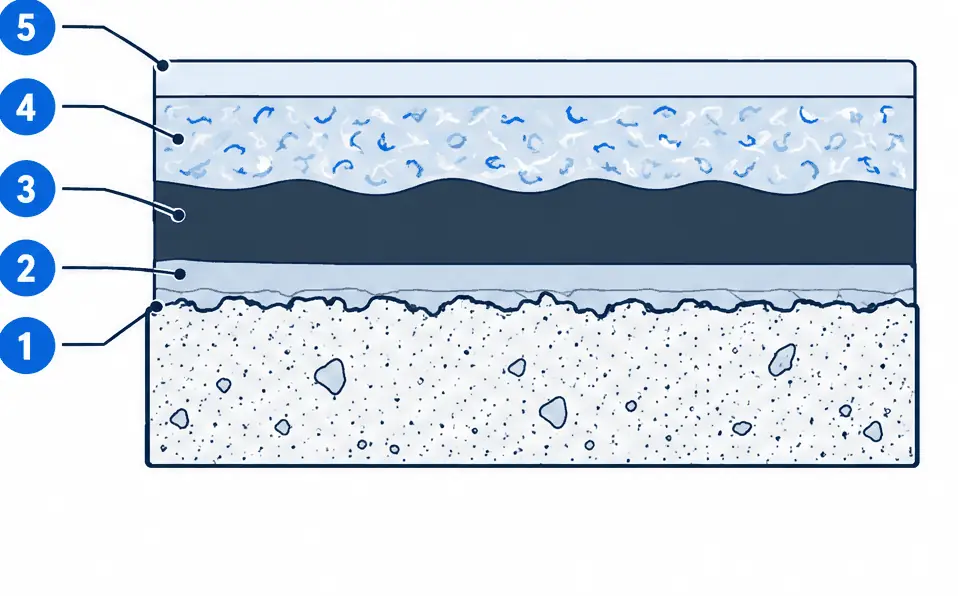
Fits Fits a showpiece garage where the swirled, depth-of-color look is the point and the slab is in good shape.
Typically $9–$13 per sq ft about $3,780–$5,460 for 420 sq ft, installed
Every vendor argues for its own product, so here is the side-by-side as plain trade-offs. Cost bands are Antioch labor and material for a typical garage, from the calculator on this page; the rest is general product behavior, and the data sheet of the actual product decides.
| System | Typical cost | Install speed | Sunlight and heat | Where it tends to fail |
|---|---|---|---|---|
| Flake (chip) epoxy with epoxy top coat | $6–$9 per sq ft | Usually two to three days before a car | Amber tint can show after years of sun | Weak prep, moisture, hot-tire pickup on a thin top coat |
| Polyaspartic flake, polyaspartic top coat | $8–$12 per sq ft | Often one day; vehicles per data sheet | Generally more UV-stable than epoxy | Mixed too fast in heat, poor prep, odor while curing |
| Polyurea (aliphatic) top coat over epoxy base | $7–$11 per sq ft | One to two days | Generally UV-stable, flexible | Thin base coat, lap lines, a cold or damp slab |
| Hybrid: epoxy base, polyaspartic top coat | $7–$11 per sq ft | Two days | UV-stable top, longer working time below | Skipped moisture test, rushed recoat window |
| Solid color epoxy, grit in the top coat | $4–$7 per sq ft | Two days | Can chalk or amber in direct sun | Thin film, bare spots, slippery if grit is left out |
| Metallic epoxy with clear top coat | $9–$13 per sq ft | Three to four days | Clear coat choice sets UV behavior | Uneven slab shows, bubbles and pinholes, scratches show |
Cost bands are market estimates, not quotes. The hybrid and polyurea rows interpolate between the sourced epoxy and polyaspartic bands. No claim of strength or lifespan is made for any row; compare film thickness, prep and the written terms instead.
IllustrationAisles, docks and forklift wear on a slab-on-grade warehouse, and when polished concrete is the better answer.
Often considered Solid color epoxy with grit
Typically from $4 per sq ft
IllustrationHot washdowns, coved edges and the county plan check, with urethane cement against epoxy side by side.
Often considered Urethane cement (wet and hot-wash areas)
Typically from $10 per sq ft
IllustrationRepair bays, fluids and lift loads, and how a chemical-resistance chart helps choose the system.
Often considered Quartz-broadcast system
Typically from $4 per sq ft
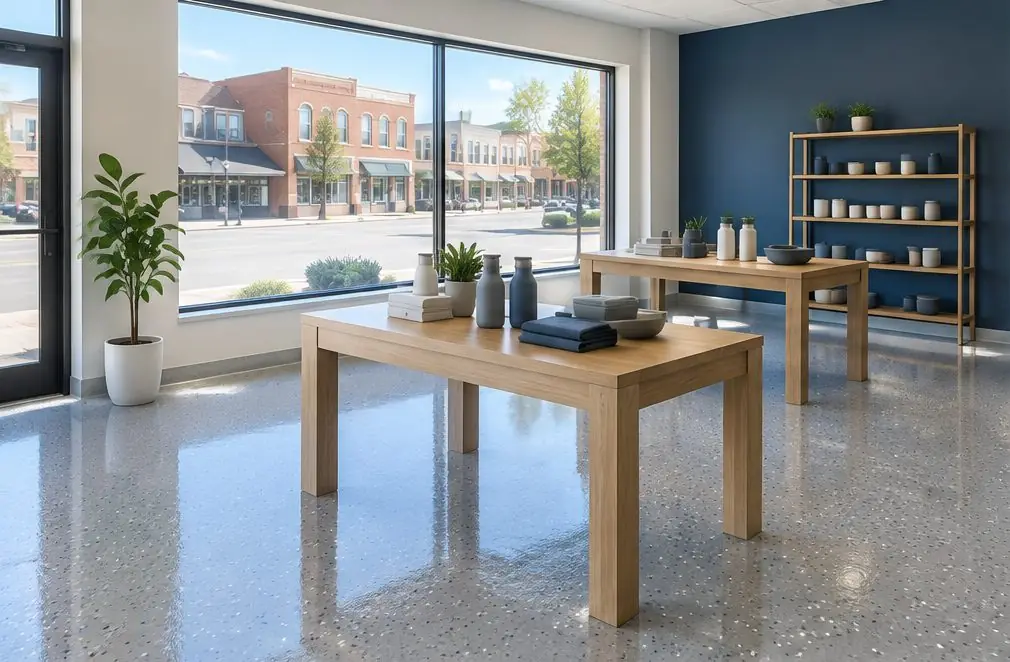 Illustration
How a store floor looks, wears and gets installed without closing the doors for a week.
Often considered Flake system
Typically from $6 per sq ft
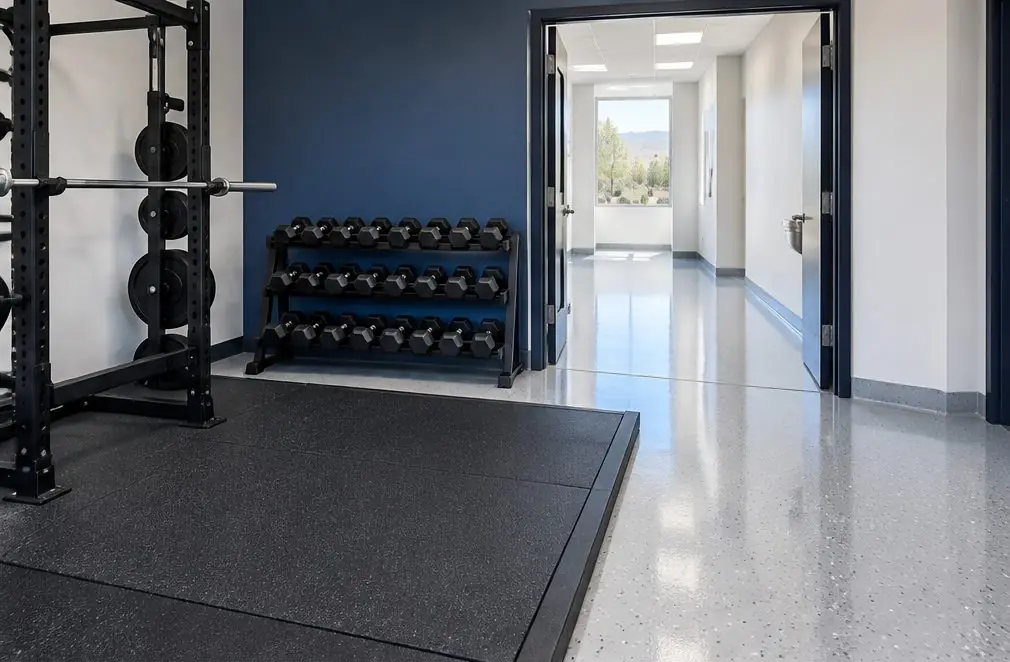 Illustration
Which gym zones suit a coating and which need rubber, with wet-area texture and ventilation notes.
Often considered Flake system
Typically from $6 per sq ft
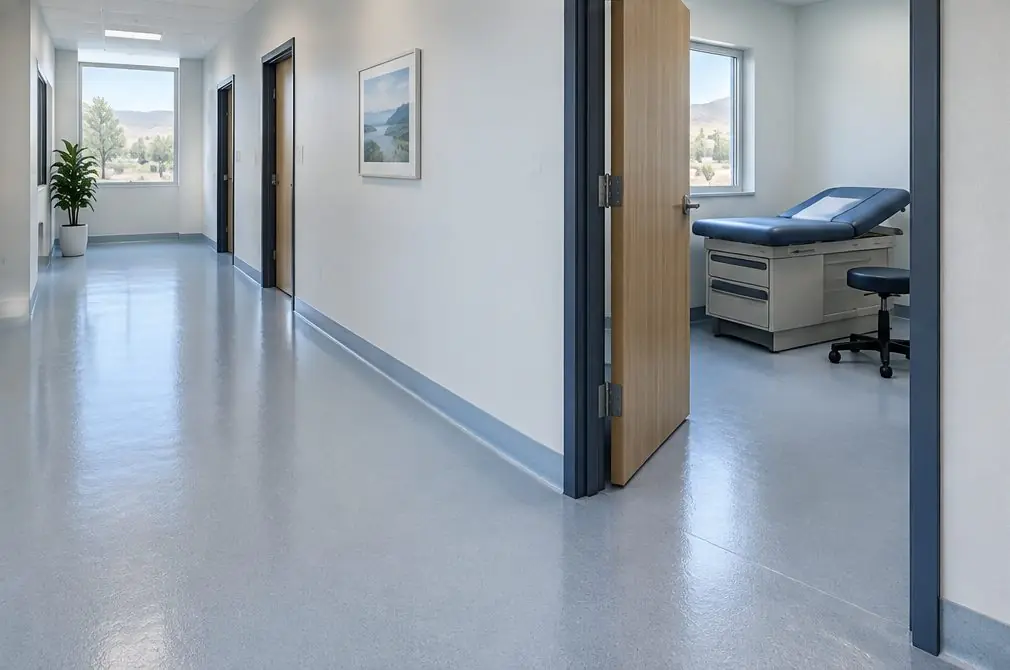 Illustration
Seamless, cleanable floors for private clinics, planned room by room around appointments.
Often considered Flake system
Typically from $6 per sq ft
Price a business floor Each kind of floor has its own page under Commercial floors in the menu.
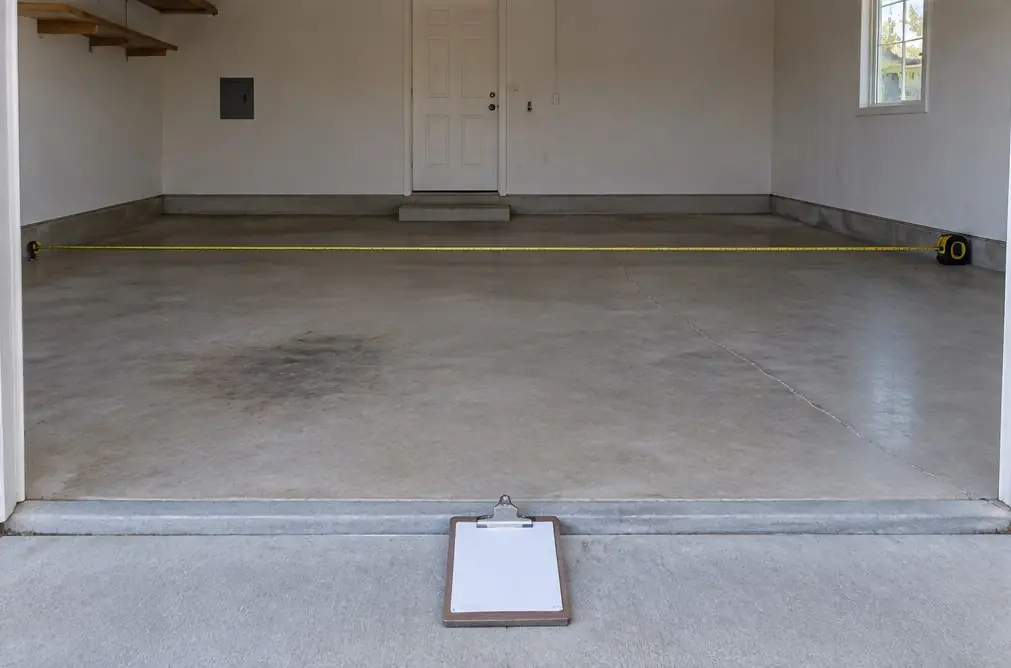 Clear, measure, lookThe garage is emptied, the floor is measured wall to wall, and cracks, oil, old paint and damp spots are noted before any price is final.
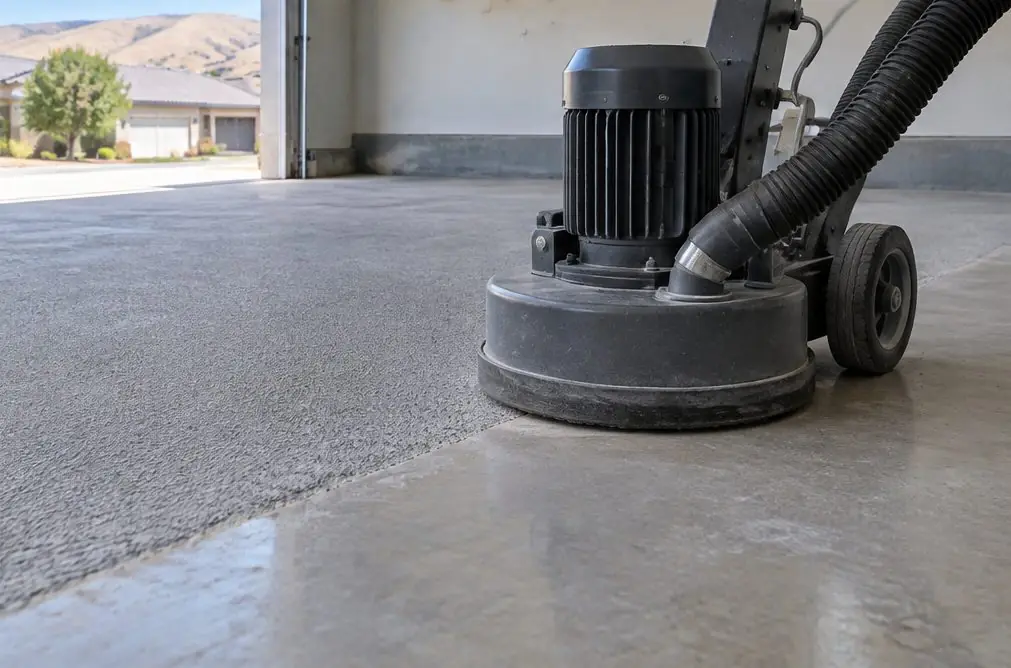 Diamond grindingA grinder with a dust shroud and a vacuum opens the surface to a rough profile the primer can grip; an acid etch alone is not the same.
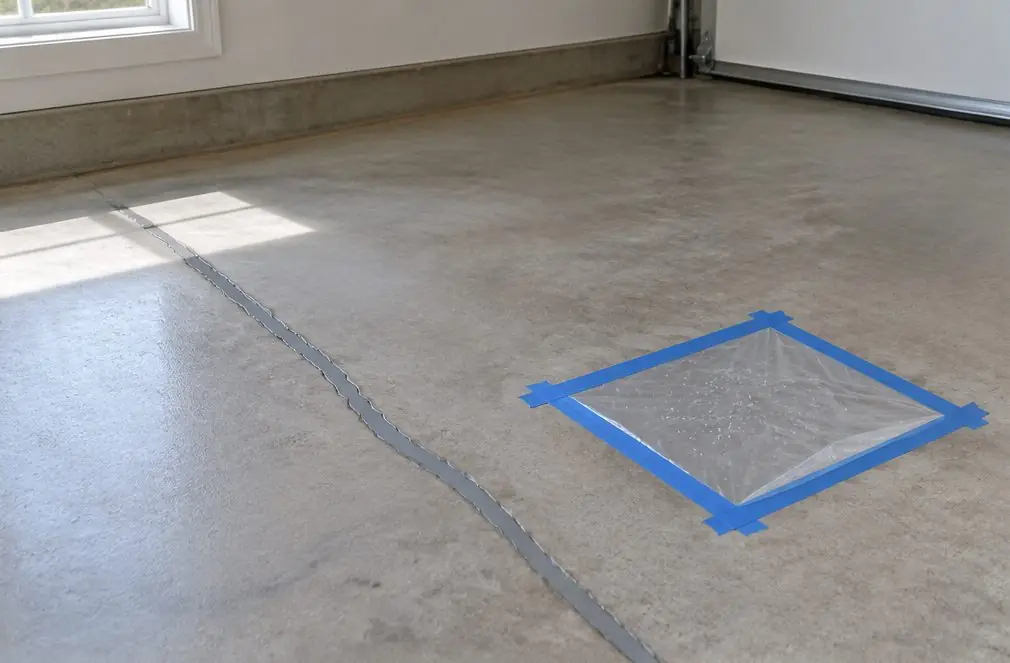 Repair and moisture testCracks and spalls are filled and ground flush, and the slab is tested for moisture where the product data sheet calls for it.
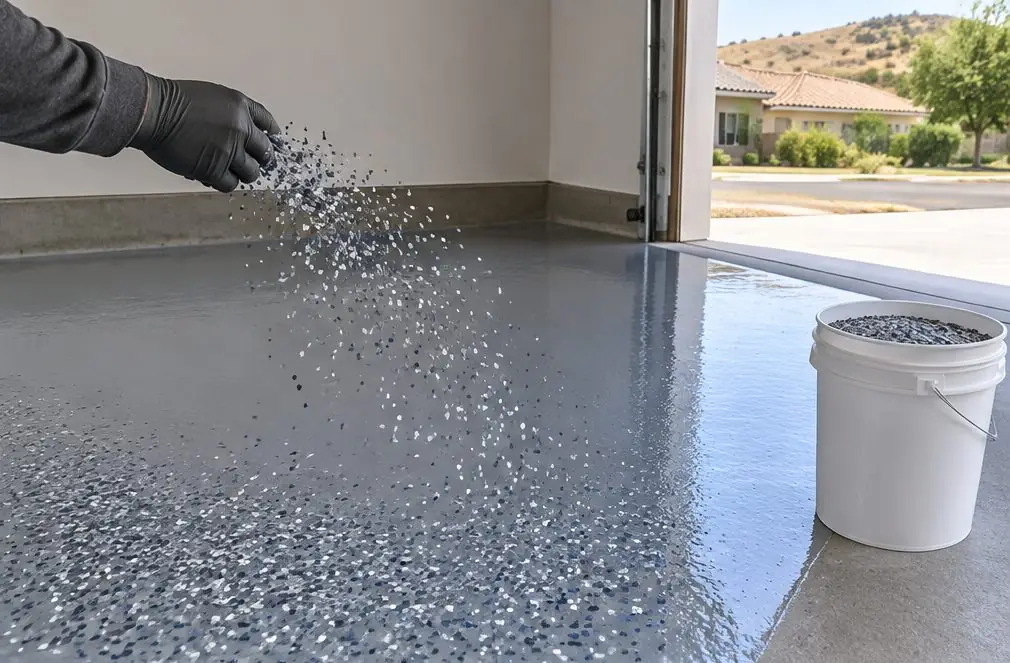 Base coat and flakesThe base coat is rolled out wet, on summer days early in the morning, and color flakes are broadcast by hand to full or partial coverage.
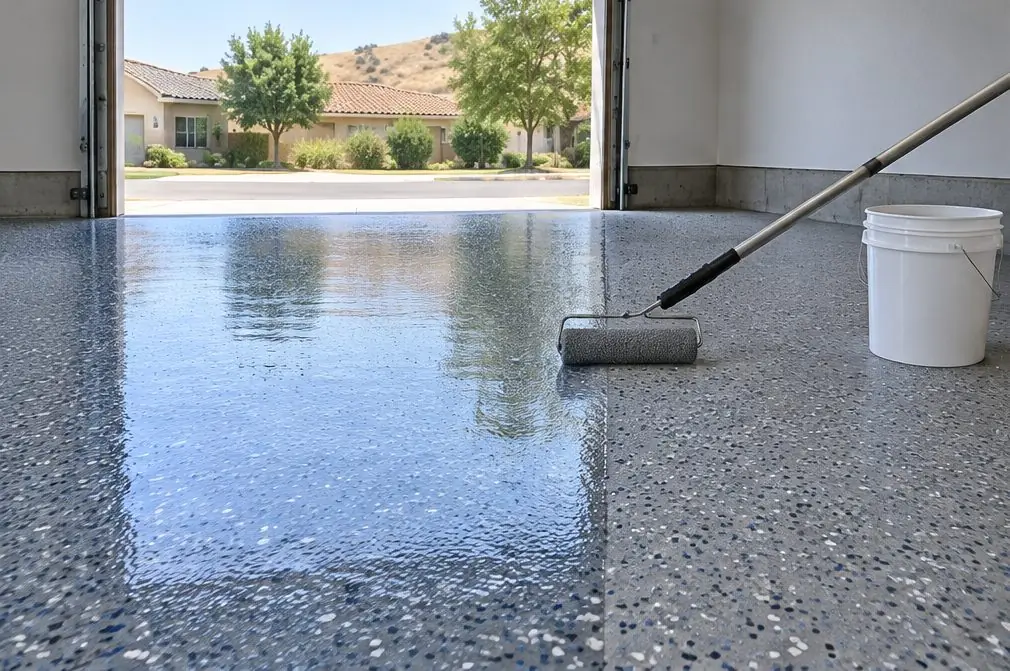 Scrape and top coatLoose flakes are scraped and vacuumed, then the clear top coat seals the surface and sets the gloss and the behavior in sunlight.
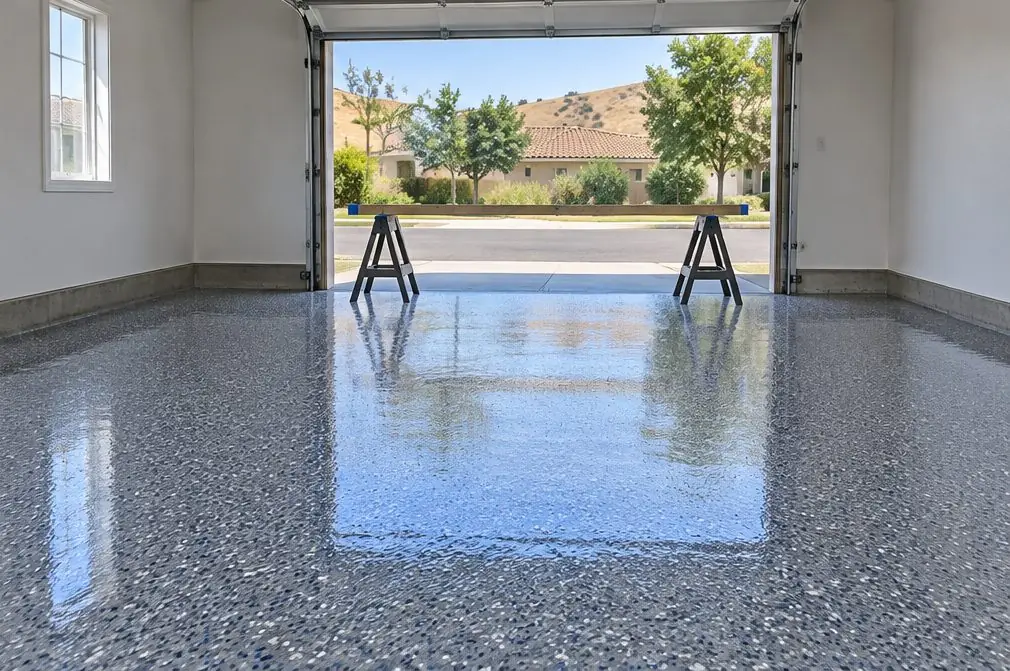 Cure, then usePeople walk on it and cars return only after the times on the product data sheet for that day's temperature and humidity.
Antioch sits at the western end of the Delta and runs hotter than the rest of the Bay Area. The 1991–2020 normals put the mean daily high at 86.1°F in June, 91.1°F in July, 89.9°F in August and 86.3°F in September, and the record at 117°F.
| Month | Mean daily high | What it changes for a garage floor |
|---|---|---|
| June | 86.1°F | Concrete warms fast; the window to roll a base coat is early morning |
| July | 91.1°F | Peak pot-life pressure; hot tires from a sun-baked driveway |
| August | 89.9°F | An open garage door lets in UV that ambers a standard epoxy top coat |
| September | 86.3°F | Still warm, but the slab cools overnight, which raises the risk of dew and outgassing |
Heat shortens the working time of every two-part coating, which is why summer jobs start at dawn and why a polyaspartic mix has to be applied fast. Concrete that is hot to the touch can also pull air out of the slab as it warms and cools, leaving pinholes in the finish.
Hot-tire pickup — a warm tire lifting the coating — is mostly a prep and product problem; a ground slab and a system rated for it reduce the risk. Epoxy can amber in sunlight, which matters when the door stays open; aliphatic polyaspartic or polyurethane top coats are generally more UV-stable.
Housing matters too. About 59% of local homes date from 1970 to 1999 and 23% from before 1970, so many slabs are decades old; some have no vapor barrier under them, so moisture is tested rather than assumed. A newer slab is not automatically a better one: a curing slab less than a month or two old holds more water.
Check the contractor's license at cslb.ca.gov before signing; work above $1,000 requires one.
Pick a base color and two to four flake colors. The swatches show the same mix as a full broadcast, where the flakes hide the base completely, and as a partial broadcast, where the base shows between them.
On-screen approximation; ask for a physical sample board.
Epoxy Floors Craft Antioch covers Downtown and Rivertown, Wilbur Avenue Industrial Area, Auto Center Drive and Somersville Road, Lone Tree Way and Lone Tree Estates, Prewett Ranch and Country Hills, Deer Valley and Sand Creek, Dallas Ranch, Black Diamond Estates — pick your neighborhood from the menu for local details and ZIP codes.
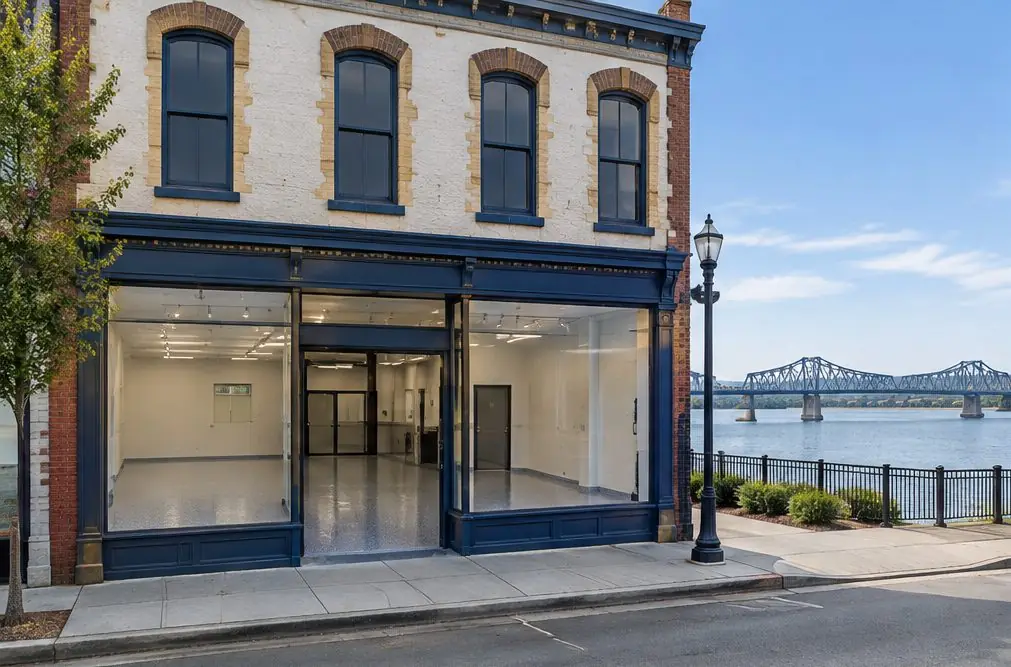
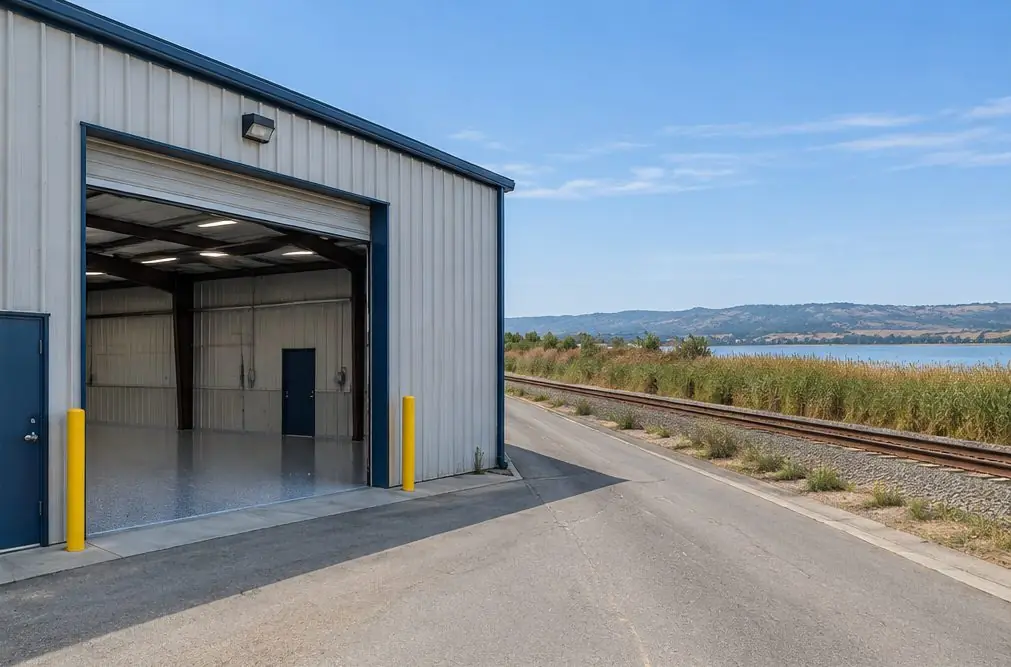
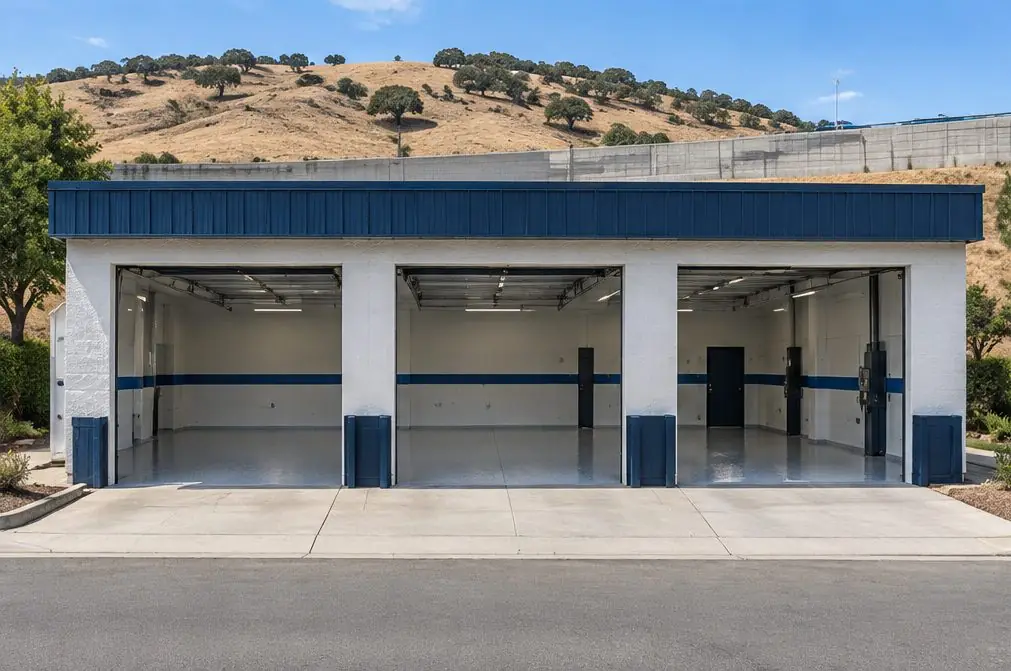
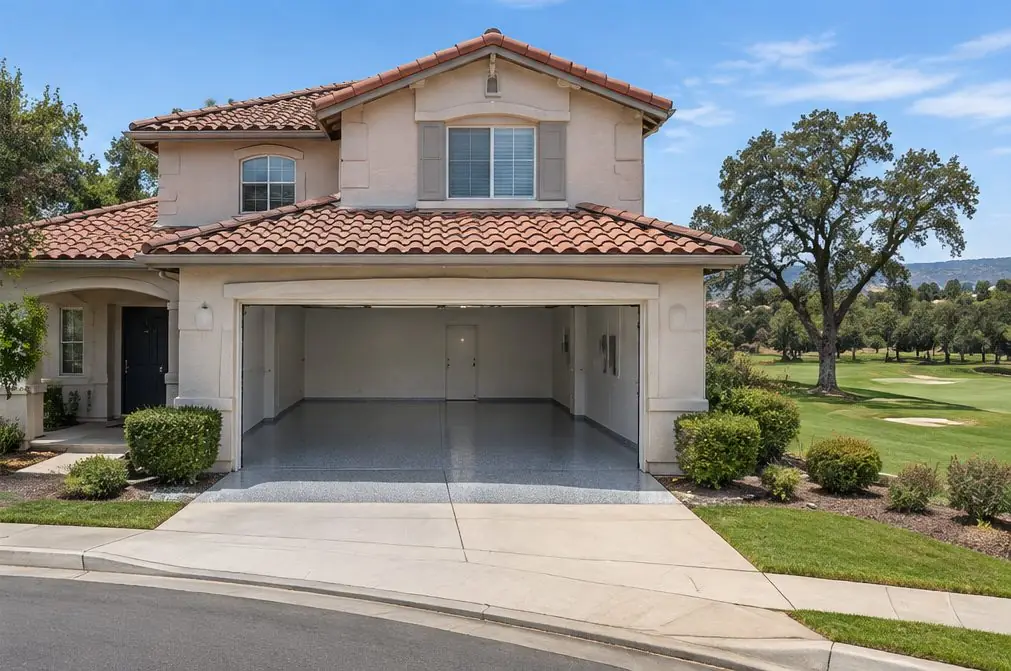
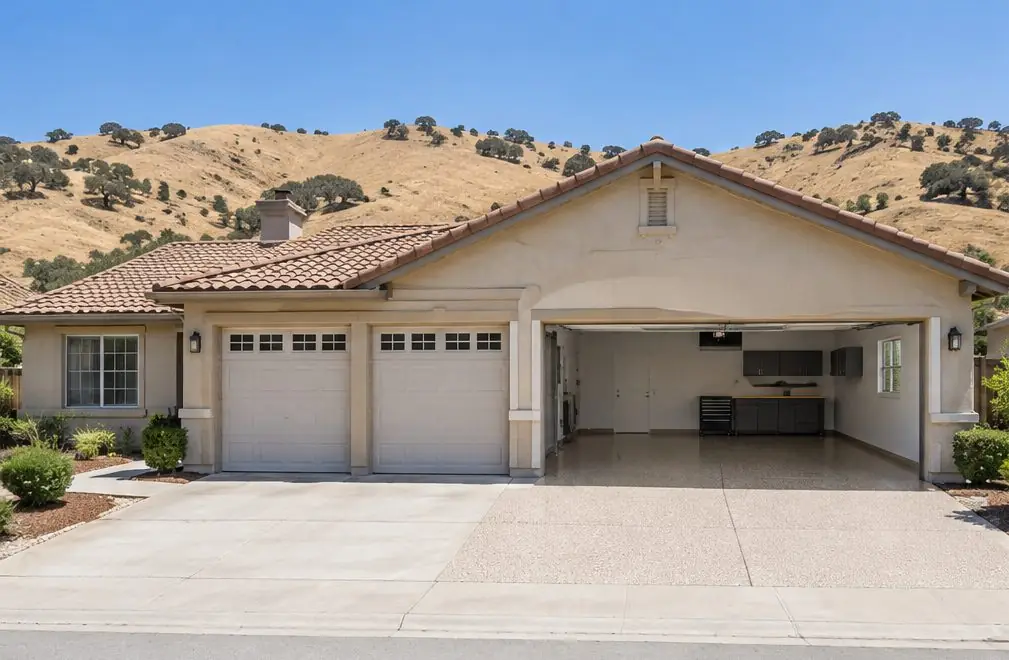
In 2027 a typical Antioch range is about $6–$9 per square foot for flake epoxy, $8–$12 for polyaspartic flake, $4–$7 for solid color and $9–$13 for metallic, on a sound slab. A 2-car garage of about 420 square feet in flake epoxy lands near $2,500–$3,800. Cracks add $1–$2 per square foot, removing an old coating $2–$6. These are market estimates, not quotes.
It depends on the garage. Polyaspartic and polyurea top coats are generally more UV-stable than standard epoxy and cure faster; epoxy is often used as a base coat because it has a longer working time and bonds well to a ground slab. Many Antioch garages use a hybrid of both.
Many polyaspartic systems can be installed in one day. Foot traffic usually resumes the next day, and vehicles return after the time on the product's data sheet, often 24 hours to several days depending on the product, temperature and humidity. Epoxy systems usually take longer, often several days before a car.
Most peeling traces back to the slab: a surface that was only etched or swept, moisture vapor coming up through the concrete, or a coating applied over old paint, oil or a weak layer. The prep and moisture guides on this site list the signs.
Hot-tire pickup — a warm tire lifting the coating — is mostly a prep and product problem; a ground slab and a system rated for it reduce the risk. After a hot Antioch afternoon the risk is highest on a thin, poorly adhered top coat.
A slab with moisture vapor coming up through it can push a coating off. Many installers test before coating (a calcium chloride test, ASTM F1869, or in-slab relative humidity probes, ASTM F2170), and where readings are high, a moisture-mitigating primer is used or the job is reconsidered.
Sometimes. A sound, well-adhered coating can be ground and recoated; peeling, chalky or glossy-over-paint surfaces are removed first. A small test grind shows which one the floor is.
The interior garage floor is usually not an HOA matter, but the association's CC&Rs decide, for example about contractor parking, open garage doors for a day or two and driveway work. Read the CC&Rs and ask the board in writing if in doubt.
A coated floor can be slippery when wet or oily. Broadcast flake and a fine grit added to the top coat add texture and grip, and the amount of grit is a choice between grip and ease of cleaning.
The commercial pages cover warehouses, commercial kitchens, auto shops, retail and showroom floors, gyms and private clinics, with a downtime planning guide and a separate business path in the calculator.
In California, floors in food facilities must be smooth, durable, nonabsorbent and easily cleanable, with a coved base where floor meets wall (California Retail Food Code, Health and Safety Code §114268). Kitchens with hot-water washdowns often use urethane cement systems, which tolerate heat and thermal shock better than standard epoxy. The county environmental health department reviews plans for new or remodeled food facilities.
Commercial installs are often scheduled after hours, on weekends or in phases, so part of the floor stays in use. Return to foot traffic, carts and forklifts depends on the system, temperature and humidity and is set by the product's data sheet.
Homes and businesses across Antioch — downtown and Rivertown, Lone Tree Way, Prewett Ranch and Country Hills, Dallas Ranch, Deer Valley and Sand Creek, Black Diamond Estates, the Auto Center and Somersville corridor, and the Wilbur Avenue industrial area. The availability check shows whether bookings are open for a ZIP.
Installers featured on this site are independent businesses. The installer's legal name and business details are published on this site before bookings open. Warranty terms, if any, are set by the installer and by the coating manufacturer; ask what is covered, for how long, and whether the prep is part of it.
Typical Antioch area floor coating prices, square foot by square foot
Pick garage or business, the size and the system, and see the range. No contact details needed. Bookings open here once a local installer is named on this site.
Bookings aren't open yet. Leave your name and number; your message is recorded, and you'll get one message when a local installer is available.