
Why Is My Epoxy Garage Floor Peeling?
Epoxy Floors Craft Antioch works through the reasons garage floor coatings peel, bubble, amber or turn sticky, sorting each symptom to its likely cause and to the prep or product choice that prevents it, because the answer almost always starts at the slab.
Bookings aren't open yet. Leave your name and number; your message is recorded, and you'll get one message when a local installer is available.
The floor as it starts
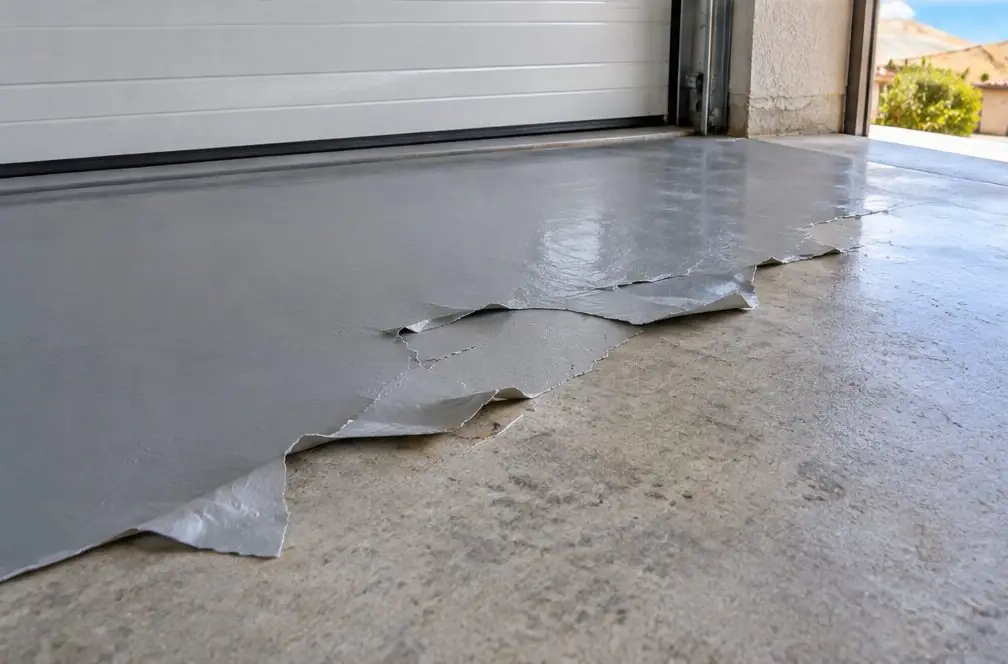 Illustration
The finished floor (illustration)
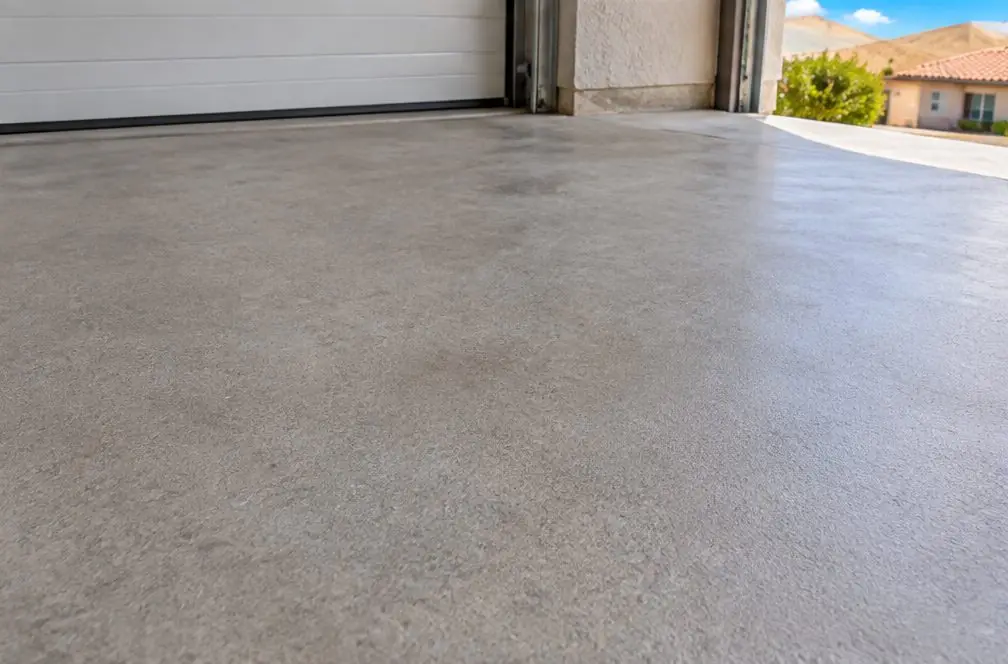 Illustration
Peeling is mostly a slab story
A coating holds by bonding to a rough, clean, dry, sound surface. When it lets go, one of those four conditions was missing: the surface was smooth or only etched, it was dirty or oily, it was damp, or the top layer of the concrete itself was weak and came away with the coating.
Symptom, cause, prevention
| Symptom | Likely cause | Prevention |
|---|---|---|
| Peeling in sheets | Weak prep or moisture vapor from below | Diamond grinding and a moisture test |
| Lifting where tires sit | Hot-tire pickup on a thin or poorly adhered coat | Ground slab, a system rated for it |
| Yellow or amber tint | Epoxy top coat in sunlight | UV-stable top coat |
| Bubbles and pinholes | Air leaving the slab as it warmed | Seal coat, the right temperature window |
| Sticky or soft patches | Wrong mix ratio or a cold, damp cure | Mix control and the cure window |
| Cloudy top coat | Humidity or a damp slab | Dew-point check and moisture test |
| Chipping | Impact on a thin film | Thicker build |
| Cracks showing through | A crack that was painted over | Cut, fill and grind flush |
Hot tires and Antioch summers
Hot-tire pickup — a warm tire lifting the coating — is mostly a prep and product problem; a ground slab and a system rated for it reduce the risk. After a drive across Antioch in July, when the mean daily high reaches 91.1°F, tires arrive hot on a driveway-warm slab, which is why the coating's bond matters more here than in a milder city.
The scrape test
Scrape the edge of a bad spot with a putty knife. A coating that peels up in a ribbon never gripped and was probably applied over a smooth or damp surface. One that resists is gripping and can often be ground and recoated rather than removed. A small test grind in an inconspicuous corner settles it.
Planning a recoat
Ask what changes: grinding instead of etching, a moisture test and primer, cracks cut and filled, and a top coat that fits the sun and the tires. Removal adds about $2–$6 per square foot to a new system in Antioch. In garages from the 1970s or earlier, old paint can contain lead, so a small sample is tested before grinding.
Where this leads
- Service page: Garage Floor Coating Removal — Why a coating failed, how it comes off and what a recoat should change.
- Local page: Epoxy garage floors in Dallas Ranch
- All services and typical prices: Epoxy garage floors in Antioch
- More illustrated guides: Epoxy Floor Guides
Check availability and the price range for this setup
Bookings aren't open yet — a typical Antioch range in about 30 seconds.